Hey, fellow travel enthusiast! You’re planning your dream vacation in beautiful Khao Lak and wondering: When is the best time to visit? That’s a really important question—and one that’s often not so easy to answer, because our tropical climate in the Phang Nga region has its own quirks. I, your Khao Lak insider, will guide you through everything you need to know to find the perfect travel time for YOU. Basically, the year here is divided into two main phases: the sunny, dry peak season and the greener, wetter off-season. Both have their own unique charm and advantages—it just depends on what you want to experience.
The High Season (November through April): Dreamy Weather & Guaranteed Swimming
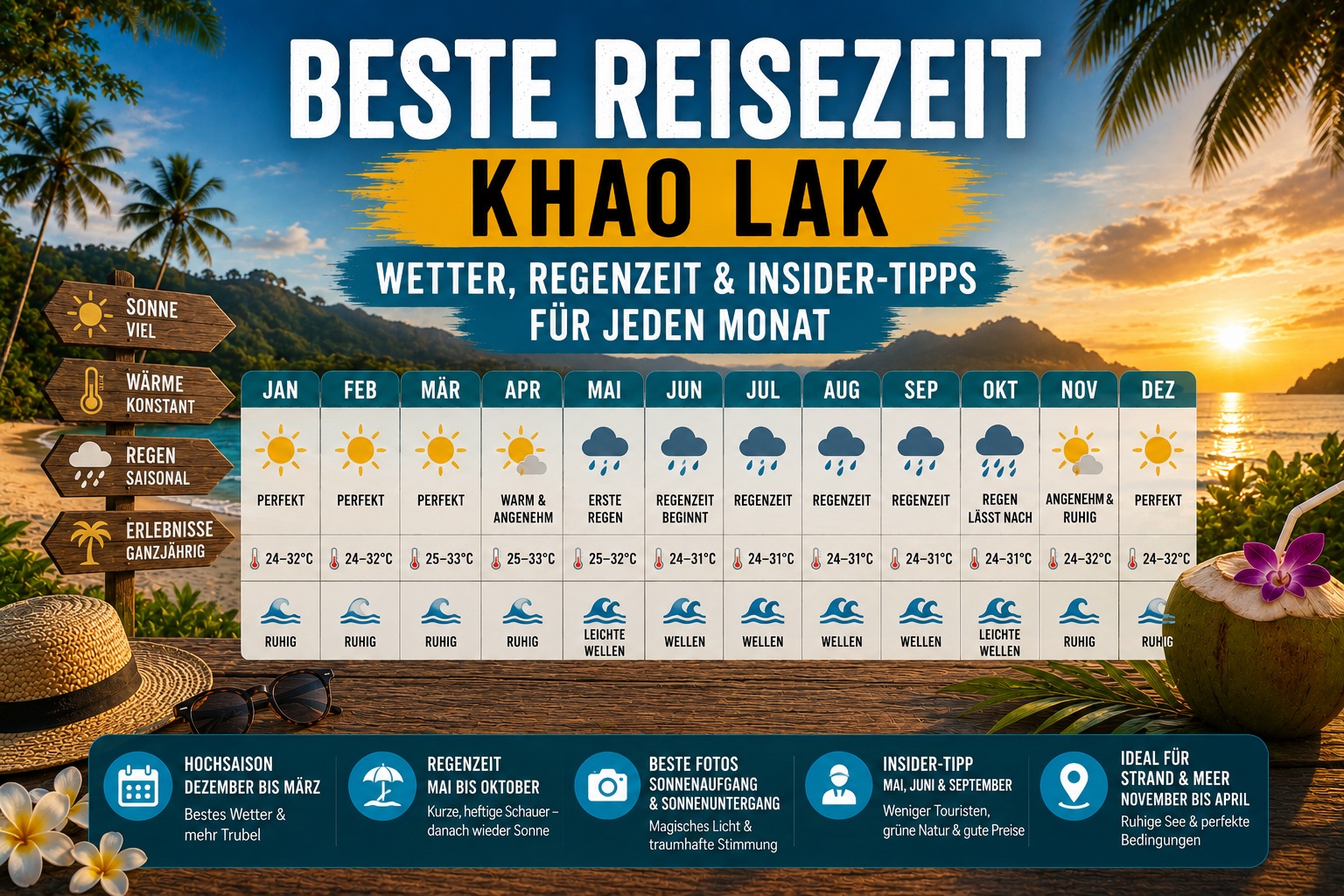
If you’re dreaming of postcard-perfect beaches with turquoise, mirror-smooth waters and bright sunshine, then the high season from November through April is just your thing. During these months, Khao Lak shows off its best side: the sky is mostly cloudless, temperatures hover consistently around 30 degrees, and the sea is so calm and clear that it feels like a giant pool. This is the absolute best time to head out to the Similan Islands for snorkeling or diving—the visibility is phenomenal! Rain? Hardly an issue—maybe just a brief shower at night to freshen the air. But be warned—and this is my honest advice: Khao Lak is especially popular around Christmas and New Year’s, as well as during the European Easter break. That means prices for hotels and flights reach their peak, and the popular beaches can get crowded. Be sure to book well in advance!
The Off-Season (May through October): Rainy Season, Peace & Quiet, and Savings
Now comes the part that might make many of you hesitate at first: Thailand’s off-season, often referred to as the rainy season from May through October. But wait—don’t panic! I can tell you from personal experience: The term “rainy season” is often misleading and sounds more dramatic than it actually is. It’s extremely rare for it to rain nonstop for days on end. Much more typical are heavy but brief showers, which usually fall in the afternoon or evening and wonderfully cool the air. Afterward, the sun often comes out again. The advantages of this time of year are a real insider tip for many travelers: Nature literally bursts into lush greenery, the waterfalls are magnificent, and the beaches? Often deserted! You’ll have vast stretches all to yourself. And the biggest perk for budget-conscious travelers: prices for accommodations and flights drop dramatically—you can often get luxury hotels at bargain prices.
Important Safety & Insider Tips for the Off-Season
One very important point about the off-season that I, as an insider, don’t want to keep from you: The ocean can be significantly rougher during these months. Strong currents and high waves are not uncommon, and swimming in the ocean can then become truly life-threatening. If you see red flags on the beach, you MUST take this warning seriously—they’re not there for no reason! But don’t worry, that doesn’t mean you have to miss out on swimming fun. Most hotels have fantastic pools where you can swim safely. And this time of year is perfect for exploring the countryside: visit the impressive Khao Sok National Park, explore mangrove forests, or take trips to waterfalls. Nature is at its most beautiful and lush during this time. By the way, the Similan Islands are also closed during this time to protect the environment and due to rough seas.
Monthly Guide: When Should You Fly?
To make your decision even easier, here’s a quick monthly guide:
- November – February: The absolute best time to travel for perfect beach weather, diving, snorkeling, and island excursions (Similan!). Expect higher prices and more crowds.
- March – April: Still gorgeous weather, but it’s getting noticeably hotter. Prices start to drop a bit; it’s still a good time for beach fun.
- May – October: The off-season. Ideal if you’re looking for peace and quiet, lush nature, and unbeatable deals. Perfect for trips inland (Khao Sok!) and relaxing by the pool. Be prepared for occasional rain showers and rougher seas. Avoid swimming in the ocean when red flags are up!