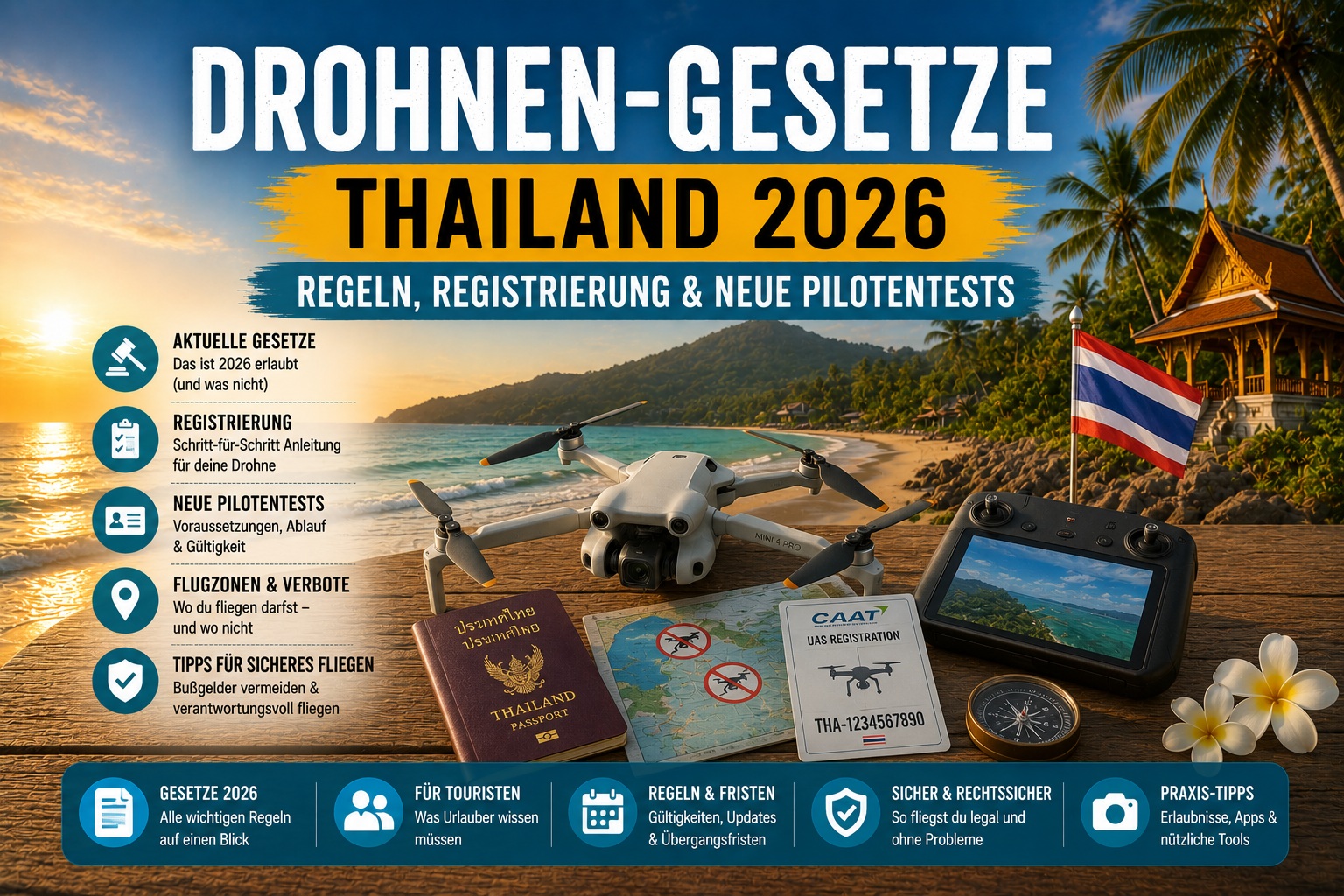
Hey there, dear Khao Lak Insider friends! Just imagine: You’re flying your drone over Thailand’s turquoise-blue bays, lush green jungles, or golden temples. The photos you can capture are simply priceless and create memories that last a lifetime! But wait! Before you lift your drone even a centimeter into the Thai sky, I have to point out something very important as your local friend and travel insider: Without complete and official registration, flying a drone here can quickly turn into a nightmare. Don’t forget: Illegal flying without the necessary permits is not taken lightly in Thailand and can lead to drastic consequences—anything is possible, from hefty fines ranging from 40,000 to 100,000 THB to prison sentences of one to five years. You certainly don’t want to go through that, do you? So, let’s make sure your drone adventures in Thailand stay completely legal and stress-free!
The 3 Required Documents for Your Flight
Now that we’ve established how serious this topic is, let’s get right to what you absolutely must have in your luggage—and, most importantly, always within reach. If you want to take off with your drone in Thailand, there are three essential items you can’t do without. These three documents are your ticket to legal and worry-free flights:
- Valid drone liability insurance: This is absolutely essential! You need insurance that’s valid in Thailand and meets the coverage requirements set by local authorities. Make sure to have the confirmation issued in English so you can present it during inspections.
- Registration with the National Broadcasting and Telecommunications Commission (NBTC): Your drone transmits radio signals, and these must be registered here. Without this approval, you won’t be able to take off!
- Registration with the Civil Aviation Authority of Thailand (CAAT): Here, your drone is officially registered as an aircraft, and you are certified as a pilot. This registration is absolutely essential.
The Registration Process Step by Step
Things are about to get a little bureaucratic, but don’t worry—I’ll walk you through it. The process may seem complex at first glance, but with the right preparation, it’s quite manageable. Just follow these steps:
- Preparation at Home: Sort out your insurance. First things first: Get your drone liability insurance in order before you even board the plane. Make sure it’s valid in Thailand and meets the minimum requirements set by Thai authorities. As mentioned, be sure to have the confirmation issued in English.
- Arrival in Thailand: SIM card and passport photo. Your first order of business after landing (aside from sunbathing!) should be to purchase a Thai SIM card. Alternatively, you can activate an eSIM that provides a local phone number. A Thai cell phone number is MANDATORY for registering with government agencies. You’ll also need a digital photo of your passport, including your current entry stamp, since permits are often tied to the validity of your visa.
- Registration with the NBTC: Next, you’ll need to register your drone—or, more specifically, its frequencies—with the National Broadcasting and Telecommunications Commission (NBTC). For foreigners, the permit is generally tied to the duration of your entry stamp. So be prepared for the fact that it will not extend beyond your permitted period of stay.
- Registration with the CAAT via the UAS portal—including a new pilot test! This is perhaps the most time-consuming, but also the most important step. Recently, the Civil Aviation Authority of Thailand (CAAT) has required EVERY pilot to take an online pilot test. It consists of 40 questions, and you need to answer at least 75% correctly to pass. Don’t worry—the questions cover local flight regulations and are manageable with a little preparation! After passing the test, you’ll receive a pilot license valid for 2 years. Only then will your drone be registered and assigned a permanent ID. You must then physically affix this ID to the body of your drone in a clearly visible location.
- Important: Every single flight must be registered! This is one of the newest and most significant changes: It’s no longer enough to register the drone just once. From now on, you must register EVERY single planned flight in advance via the official CAAT app. Yes, you heard that right—every takeoff and landing in Thai airspace requires prior authorization via the app. So be sure to factor this into your travel plans!
The Most Important Flight Rules in Thailand
Even if you have all your documents in order and have completed the registration process, there are still a few basic rules you must follow to avoid trouble. These do’s and don’ts are non-negotiable and are designed to ensure your safety and protect the privacy of others:
- Maximum flight altitude: Strictly adhere to the maximum flight altitude of 90 meters. You can’t go any higher!
- Line of sight and daylight: You may only fly your drone within direct line of sight. This means: No flying solely via the monitor, and only during daylight hours. Night flights are strictly prohibited.
- Maintain distances:
- Stay at least 9 kilometers away from airports and their flight corridors. This is a safety zone for regular air traffic.
- A horizontal safety distance of at least 50 meters from people, vehicles, and buildings must also be strictly observed. This means you may not fly directly over people, moving cars, or residential buildings.
- Absolute no-fly zones: There are places where flying is simply prohibited—without exception. These include: cities, villages, any gatherings of people (e.g., markets, festivals, concerts), government buildings, military installations, and hospitals. Be sure to respect these zones!
- Border regions are off-limits: An important note: In the provinces that directly border Cambodia, as well as in certain districts such as Pattaya, flying drones is generally prohibited. Be sure to check the details here in advance!
- National Parks – Special Permits Required: For Thailand’s breathtaking national parks, such as the famous Khao Sok National Park or the idyllic Similan Islands, your general drone registration is NOT sufficient. An additional permit from the respective park administration on-site is mandatory here. The park rangers are very vigilant and enforce these rules strictly. Be sure to check with the park administration in advance to find out what steps are necessary to obtain a permit there.
Conclusion: Flying Safely in Khao Lak
So, dear drone pilots and future travelers to Thailand! Yes, the bureaucratic effort required to fly drones legally in Thailand shouldn’t be underestimated, especially with the new pilot tests and the mandatory registration for every flight. But trust me as your Khao Lak insider: If you follow the rules, every minute of preparation is worth it! The unique perspectives and breathtaking shots you can capture of our beautiful Thailand are worth every bit of effort. Respect Thai laws, plan your flights carefully, and enjoy the freedom to capture Thailand’s beauty from a bird’s-eye view—safely and legally. Then nothing will stand in the way of your very own “bird’s-eye view” experience in Khao Lak and beyond! Take off safely and create unforgettable memories!